Monday, September 23, 2024

Improving primary care for patients with opioid use disorder

Earlier this year, the National Center for Health Statistics announced that in 2023, the estimated number of drug overdose deaths decreased for the first time since 2018 from 111,029 in 2022 to 107,543 in 2023. Mirroring the overall trend, overdose deaths involving opioids decreased from an estimated 84,181 in 2022 to 81,083 in 2023. However, medical care of patients who survive overdoses remains suboptimal. A cohort study of more than 130,000 Medicare beneficiaries who experienced a nonfatal drug overdose in 2020 found that although 88.8% received behavioral health services, only 4.2% were prescribed medications for opioid use disorder (OUD) and 6.2% filled a naloxone prescription during the following year.

An analysis of 2022 data from the National Survey on Drug Use and Health suggests that 3.7% of U.S. adults meet DSM-5 diagnostic criteria for OUD. Of this group, 55.2% received some form of OUD treatment, and 25.1% received medications for OUD. Another survey study highlighted one significant barrier to care: Most people either do not know that primary care physicians can prescribe medications for OUD or incorrectly believe that they cannot. Although family physicians make up the largest share of buprenorphine prescribers, according to a 2020 Graham Center Policy One-Pager, the vast majority of family physicians are not prescribing. A systematic review found that physicians are reluctant to address substance use and addiction in their practices because of lack of institutional support, knowledge and skills, and cognitive capacity.

Collectively, these health care system limitations create major gaps in the cascade of care for OUD, according to a JAMA commentary:

The care cascade—widespread screening regardless of the point of care; ensuring diagnosed patients receive treatment, including medications; and retaining patients in care—has been part of medical care for many years and most clinicians, regardless of medical specialty or practice setting, have understood its importance. … With 1 in 27 adults needing OUD treatment, most US clinicians are likely to have patients who need treatment in their practices, whether they are aware of it or not.

For patients with OUD who decline treatment with sublingual or long-acting injectable buprenorphine, clinicians can offer harm reduction strategies such as naloxone distribution, needle and syringe programs, and long-acting reversible contraception, if applicable. A previous AFP article on primary care for persons who inject drugs recommends screening for HIV infection, latent tuberculosis, and hepatitis B and C; providing vaccinations for hepatitis A and B, tetanus, and pneumonia if indicated; and offering HIV pre-exposure prophylaxis.

A cluster randomized trial conducted from July 2021 to June 2022 evaluated the effect of a community-level intervention to increase uptake of evidence-based practices to reduce opioid-related overdose deaths: overdose education and naloxone distribution, medications for OUD, and prescription opioid safety. In the United States, 67 communities in Kentucky, Massachusetts, New York, and Ohio were randomized to the intervention or a wait-list control. Unfortunately, opioid overdose death rates were similar in the intervention and control groups. The intervention’s apparent lack of effect may have been due to the short follow-up period, a coincidental spike in fentanyl-related overdoses, challenges in implementing practice changes during the COVID-19 pandemic, and a low (less than 20%) rate of medications for OUD–prescribing in intervention communities.

**

This post first appeared on the AFP Community Blog.

Sunday, September 15, 2024

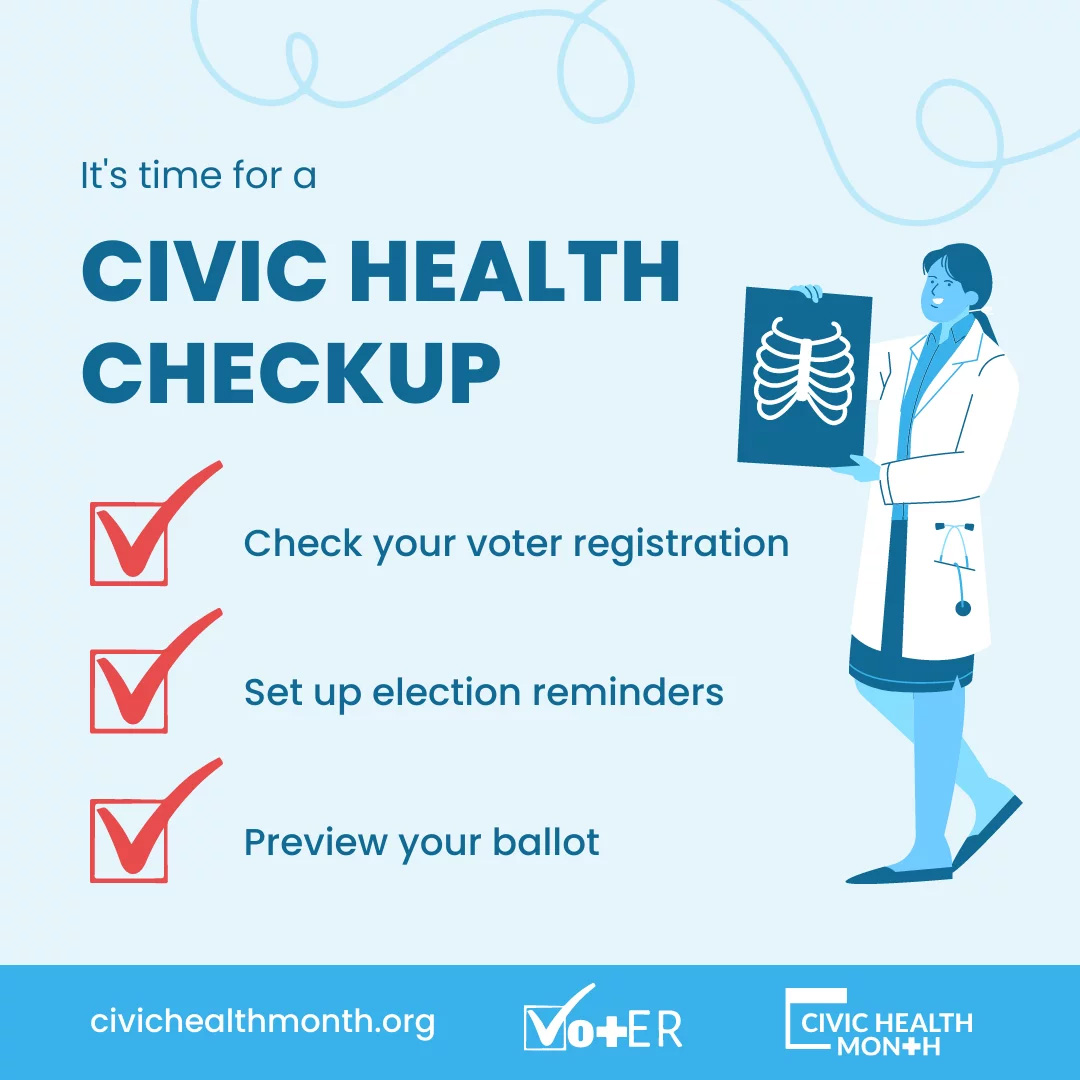
Get out the vote: supporting civic health in primary care

The national organization Vot-ER designated August as Civic Health Month, “a time to showcase the link between voting and health and celebrate efforts that ensure each and every voter has the opportunity to support their community’s health at the ballot box.” Partners, including the American Association of Medical Colleges, encourage clinicians and health care organizations to support an inclusive democracy by providing patients with nonpartisan education and voter registration services.


A narrative review in The Milbank Quarterly explored the role of primary care in advancing civic engagement and health equity. Research shows that poorer population health is associated with lower voter turnout, with stronger associations occurring in early adulthood rather than in middle age. On the other hand, voting is associated with positive mental health and health behaviors, and higher levels of individual happiness strongly predict future civic engagement. Similarly, volunteers are less likely to be hospitalized and more likely to receive preventive care, even after controlling for age, gender, race, income, education, and insurance status: “In one study of US adults, volunteers spent 38% fewer nights in a hospital and were more likely to receive services such as flu shots, cholesterol screening, mammograms, and prostate exams as compared with nonvolunteers.”

Primary care physicians have successfully engaged patients with “civic health check-ups” at federally qualified health centers and other outpatient locations. In a voter registration project in the waiting areas of two family medicine residency clinics in the Bronx, volunteers registered 114 of 128 eligible patients during a 12-week period, 65% of whom were younger than 40 years. During the COVID-19 pandemic, a general internal medicine clinic in North Carolina used its patient portal to disseminate a REDCap survey containing embedded links to voter resources, including safer alternatives to in-person voting during the 2020 elections.

Outside of these and other individual case studies, voter enfranchisement remains, to borrow from the title of a 2020 perspective article in the Journal of General Internal Medicine, “an underused treatment strategy." To make voting a “standard of care,” Vot-ER is hosting several online events this month for clinicians who are interested in empowering patients to support their community’s health at the ballot box.

**

This post first appeared on the AFP Community Blog.

Wednesday, September 11, 2024

Assessing new screening strategies: collaboration and persistence pay off

One strategy that I've found ensures a long and productive academic career is collaborating with talented and curious colleagues. I first put it into practice as a medical officer at the Agency for Healthcare Research and Quality, writing evidence summaries and systematic reviews with other staffers and rotating Preventive Medicine residents. At Georgetown, I collaborated with a terrific team of health researchers to write papers on interpreting and managing test results for Zika virus and COVID-19. I've collaborated with members of the AAFP's Commission on Health of the Public and Science on clinical practice guidelines on COPD exacerbations and blood pressure targets in adults with hypertension. I've collaborated on articles on social media for doctors and advocacy curricula in family medicine residency programs. Through the Lown Institute, I have collaborated on original work estimating the U.S. rate of overuse of screening colonoscopy and the associated harms. And most recently, I worked with a longtime mentor and sometime mentee on an analysis piece in BMJ Evidence Based Medicine that assesses evidence thresholds for proposals for updating established screening strategies.

How this paper came about deserves some explanation. In spring 2021, a company interested in developing a new screening test approached me to ask whom they should consult about the type of evidence required for that test to be endorsed by guideline panels and be covered by insurance. I recommended Russ Harris, a former U.S. Preventive Services Task Force (USPSTF) member who had retired from his academic position at UNC-Chapel Hill but was still interested in pursuing new scholarly projects. Russ then reached out to me in an e-mail: "I don’t think the methods are well worked out for replacing an established screening strategy with a new one in the absence of a formal RCT. Do you have any interest in [doing] some scholarly work on making a contribution to this problem?"

I responded: "I agree with you that it's not clear what kind of evidence is needed to recommend a new screening strategy without a RCT with mortality outcomes. I've been puzzling over this problem since the USPSTF first recommended CT colonography and FIT-DNA for colorectal cancer screening, apparently on the basis of being able to plug their diagnostic accuracy studies into a decision model. I don't see how the TF got to 'high certainty of substantial net benefit' for these tests."

Not long after that, we recruited the third member of our team: Alison Huffstetler, whom I met when she was completing her policy fellowship at Georgetown (we both saw patients in the same family medicine office on Fridays) and had subsequently taken a research faculty position at Virginia Commonwealth University. We decided that we would each study a different condition where the USPSTF had adopted a new screening strategy (cervical, colorectal, and breast cancer) and formulate some common principles that would drive the paper's analysis. Ambitiously, in early May I proposed a timeline that would allow us to "get the bulk of the paper written in the second half of June / first half of July [2021]."

It took a bit longer than that. I moved back to DC from Utah, then moved to Lancaster the following summer to start a new job. Alison got married, changed jobs, and had a baby. Russ kept us on task and, though many Zoom calls, we kept making progress.

Finally, in January 2023 (a year and a half later), we completed a manuscript that we submitted to the American Journal of Preventive Medicine. It was peer reviewed but rejected. We did some rewriting and resubmitted it to JAMA Internal Medicine in June 2023. It was "desk rejected" (not sent out for review) by JAMA-IM, then, in rapid succession, transferred to and rejected by JAMA Health Forum and JAMA Network Open. We moved on to the Journal of Clinical Epidemiology, Annals of Internal Medicine, and then the Journal of General Internal Medicine: same outcome. In the meantime, I presented our paper at the Preventing Overdiagnosis conference in Copenhagen and received some encouraging feedback, which provided enough motivation to keep trying. We embarked on another rewrite and resubmitted the paper as an analysis piece to BMJ in January 2024. The journal's editors rejected it after peer review, but they advised that it could be a good fit for BMJ Evidence Based Medicine. We revised our paper in response to the reviews and submitted it to BMJ-EBM in April 2024. More revision requests ensued. Finally, on August 21, our paper was accepted, and it was published online on September 3.

If you've been keeping count, 8 journals had a chance to publish our manuscript but passed after varying degrees of editorial and peer review. Number 9 turned out to be the charm. This paper required not only collaboration, but dogged persistence and an unswerving belief that we had something of value to contribute to the dialogue around screening. I hope you will agree.

Saturday, August 24, 2024

Strategies for earlier detection of type 1 diabetes in children

An estimated 1.8 million people in the United States, or nearly 1 in 250 children and 1 in 200 adults, have type 1 diabetes. One-third of children with type 1 diabetes are diagnosed when they develop diabetic ketoacidosis (DKA), which is not only life-threatening in the short term but is associated with poor long-term glycemic control. First-degree relatives are 15 times as likely as the general population to have type 1 diabetes, and the American Diabetes Association recommends testing them for pancreatic islet autoantibodies to predict whether they will develop the disease. In a prospective study, children previously identified as being at high risk of type 1 diabetes based on autoantibodies had a low incidence of DKA (3.3%) at the time of diagnosis.

Not only does the presence of islet autoantibodies have prognostic significance, selected patients may be eligible for teplizumab (Tzield), a monoclonal antibody approved by the U.S. Food and Drug Administration in 2022 to delay the onset of type 2 diabetes in high-risk individuals. An international randomized, placebo-controlled trial tested a 14-day intravenous infusion of teplizumab in 76 nondiabetic relatives of patients with type 1 diabetes (including 55 children 8 to 17 years of age) with two or more autoantibodies and impaired glucose tolerance. The intervention group had a median time to diagnosis of type 1 diabetes of 48.4 months, compared with 24.4 months in the placebo group. A subsequent trial showed that teplizumab preserves β-cell function in patients with newly diagnosed type 1 diabetes but does not improve clinical outcomes.

Teplizumab’s exceptionally high price ($13,850 per vial; $194,000 for a 14-day course) and limited benefits—delaying type 1 diabetes onset for an average of 2 years—means that other strategies are needed to improve outcomes in at-risk children. Notably, 80% of patients with type 1 diabetes have no affected relatives. However, it is not known whether screening the general population for type 1 diabetes with genetic or autoantibody tests would lead to more benefits than harms.

One alternative to population-wide screening is using machine learning to predict type 1 diabetes in primary care. A June 2024 study in The Lancet used electronic health records from more than 2 million children in Wales to develop and validate a predictive algorithm for type 1 diabetes based on 26 symptoms, history elements, and timing of primary care visits. When the algorithm was set to generate an electronic alert at 10% of visits, 7 in 10 children with type 1 diabetes would have triggered an alert in the 90 days before diagnosis and been diagnosed an average of 9 days earlier. Fewer alerts (e.g., 5% of visits) reduced the number of early diagnoses. Although the researchers asserted that implementing the algorithm would “substantially reduce the proportion of patients with new-onset type 1 diabetes presenting in [DKA],” they acknowledged that further studies are needed to test the feasibility of this strategy and its relationship to “alert fatigue” and clinician burnout in practice.

**

This post first appeared on the AFP Community Blog.
Tuesday, August 13, 2024

Vaccines protect patients from complications of measles, RSV, and COVID-19

August is National Immunization Awareness Month, when public and private health organizations are encouraged to highlight the benefits of vaccines for patients of all ages. In a recent webinar, Centers for Disease Control and Prevention (CDC) Director Mandy Cohen, MD, MPH, discussed how primary care can support federal vaccine efforts, from participating in the national Vaccines for Children program to pre-ordering annual influenza and COVID-19 vaccines to eliciting questions patients and parents may have about vaccines.

Recent publications have reinforced the protective effects of vaccines against complications of measles, respiratory syncytial virus (RSV), and COVID-19. In an American Family Physician editorial, Dr. Doug Campos-Outcalt alerted family physicians to this year’s measles resurgence and its association with a small decline (95% to 93%) in the percentage of kindergarten-age children who have received two doses of measles, mumps, and rubella (MMR) vaccine. Measles is a highly contagious illness that is not free from complications, as some people believe:

Before the introduction of the measles vaccine in 1963, there were an estimated 3 million to 4 million cases of measles each year, leading to 48,000 hospitalizations, 1,000 cases of encephalitis, and 400 to 500 deaths.

Although not technically a vaccine, the monoclonal antibody nirsevimab was approved by the U.S. Food and Drug Administration in July 2023 for the prevention of RSV bronchiolitis in infants younger than 12 months. A prospective, matched case-control study examined the real-world effectiveness of nirsevimab in preventing hospitalization for RSV bronchiolitis in France during the 2023-2024 season, before that country’s implementation of maternal RSV vaccination. Nirsevimab was 83% protective against hospitalization for RSV-associated illness and reduced pediatric intensive care unit admissions by 70%.

COVID-19 vaccines have been shown to reduce the risk of infections and hospitalizations; however, there have been conflicting data about whether they are protective against postacute sequelae of SARS-CoV-2 (PASC, also known as long COVID). An analysis of a national primary care registry found that breathing difficulties, fatigue, and sleep disturbances often persist after having COVID-19. A large U.S. Department of Veterans Affairs case-control study showed that the rate of PASC decreased during the pre-Delta, Delta, and Omicron eras of COVID-19 and was significantly lower among vaccinated people after vaccines became available. Of the overall decrease in PASC, researchers estimated that 28% was attributable to viral changes and 72% attributable to vaccines.

**

This post first appeared on the AFP Community Blog. Although it's hard to put a price on the suffering and deaths prevented by vaccines, an analysis published last week estimated that during the past 30 years in the U.S., childhood immunizations have produced a net savings of $540 billion in direct costs and $2.7 trillion in societal costs.

Saturday, August 3, 2024

The case for supporting more American immigrants, not less

As a senior faculty member at a medical school and now a residency program, I'm used to writing letters of recommendation (LOR) for students, residents, and junior faculty applying for promotions. A few years ago, I received a LOR request from a fellow (a physician who has completed residency and is pursuing specialized training) whom I'd never met before and who wasn't applying for faculty position or promotion. Instead, this foreign-born physician was applying to stay in the U.S. The reason he was asking me to support his application is that one of my papers had cited one of his research studies. As a "well-known physician and researcher in the field of Family Medicine," I could testify to the importance of his contribution to medical science in this country. He hoped to extend his visa in the EB-2 National Interest Waiver category, which requires that applicants "have an advanced degree or extraordinary ability and prove their work can significantly contribute to the US economy." I wrote the LOR, and though I did not hear back about the outcome, I recently Googled his name and was pleased to see that he was able to complete his training and is now an attending physician at a respected medical institution.

The contribution of international medical graduates (IMGs) to the U.S. physician workforce is, and has always been, substantial. My late grandfather (a neuropsychiatrist), uncle (an emergency medicine physician) and aunt (an ophthalmologist), all attended medical school in China before immigrating to the U.S. to teach and practice medicine. According to a recent article in JAMA, "there are currently more than 230,000 licensed IMGs who graduated from more than 2000 different medical schools in 169 countries." Some of these IMGs were immigrants like my relatives, while others were U.S. citizens who attended medical schools outside of the U.S. (most often in the Caribbean). Since U.S. medical school graduates tend to settle and practice in urban areas and enter higher-paying medical subspecialties, IMGs fill essential gaps in primary care and underserved rural areas - though a recent study suggested that fewer of them are choosing to do so.

This year's race for the Republican Presidential nomination, which concluded with the nomination of Donald Trump for the third election in a row, had the distinction of including two candidates who are the children of Indian immigrants: Nikki Haley and Vivek Ramaswamy. Both candidates, sensitive to the prevailing anti-immigrant sentiment in the GOP, were careful to note that their parents were "legal immigrants," presumably in contrast to the thousands of "illegals" migrating across the Mexican border. There are, of course, well-established pathways for highly educated foreign-born persons like their parents and mine to enter and remain in the U.S. That influx of talented doctors, scientists, engineers, and others is essential to maintaining America's technological preeminence.

But the U.S. doesn't just need highly educated professionals - it also needs factory laborers, construction workers, farm workers, nannies, housecleaners, and other working-class professions that don't qualify for EB-2 National Interest Waivers. Even if "mass deportation" of tens of millions of undocumented immigrants living in the U.S. was possible - and contrary to popular belief, the Biden administration expelled more migrants (2.8 million) during its first two years than Trump did during his entire 4-year term - it would result in wholesale economic disaster. What America needs isn't a way to get rid of more immigrants who are holding useful jobs and making our country better; instead, as I wrote ten years ago, it needs to create more legal pathways to citizenship that don't require a LOR from a professor of family medicine.