Sunday, August 16, 2020
How do primary care physicians prioritize preventive services?
Tuesday, August 11, 2020
Defining hypertension, personally and professionally
I recently started measuring my blood pressure at home at the recommendation of my new family physician in Salt Lake City, whom at a new patient visit had gotten readings that were somewhat higher than I'd had in the past. This finding was not completely unexpected: I'm in my mid-40s, have a family history of hypertension and cardiovascular disease, and my physical activity and dietary habits frequently fall short of optimal. On the other hand, he and I are well aware that out-of-office blood pressure readings are much better at predicting the risk of future hypertension-related events than those taken in the office; in a recent study of 90 family medicine patients with "uncontrolled" blood pressure in the office, nearly two-thirds had normal (defined as <140/90 mm Hg) readings at home.
Professionally, I struggle with hypertension too. As a former Clinical Practice Guideline subcommittee Chair and current scientific advisor for the American Academy of Family Physicians, I participated in the development of a 2017 guideline that suggested a target systolic blood pressure goal of <150 mm Hg for adults aged 60 years or older, and in the decision to not endorse a guideline from the American College of Cardiology / American Heart Association that set a blood pressure target of <130/80 mm Hg for adults of all ages, effectively redefining hypertension. Several publications have expressed concerns about the ACC/AHA hypertension guideline, including my Medscape commentary, an independent analysis of incremental benefits and harms, and a more recent research letter finding that "the clinical trials underlying new treatment thresholds are representative of less than one-third of the guideline target population."
Is it problematic that inconsistencies across recommendations in hypertension practice guidelines mean that family physicians and general internists may define high blood pressure differently than cardiologists? Yes and no. Although in an ideal world there would be a single (primary care-led, federally funded) hypertension guideline endorsed by all relevant stakeholders, including patient representatives, this is unlikely to be a national priority until the COVID-19 pandemic, which has caused the premature deaths of more than 163,000 Americans, is brought under some semblance of control. And just as emergency medicine physicians are often justified at taking a more aggressive testing and treatment approach to a patient with chest pain than a family physician evaluating a patient in his or her office, it's arguable that the greater long-term risk of cardiovascular events in patients who see cardiologists warrant more intensive treatment of blood pressure than patients in primary care settings.
I acknowledge that my training in family medicine and expertise in guideline development make me an atypical patient, better positioned than most to debate the pros and cons of blood pressure interpretation and treatment. At the same time, I have no interest in receiving "special treatment." I want my primary care physician to choose a hypertension guideline that makes sense given my individual circumstances and recommend a course of action supported by the best available evidence. Ultimately, that's what every patient deserves.
Sunday, August 2, 2020
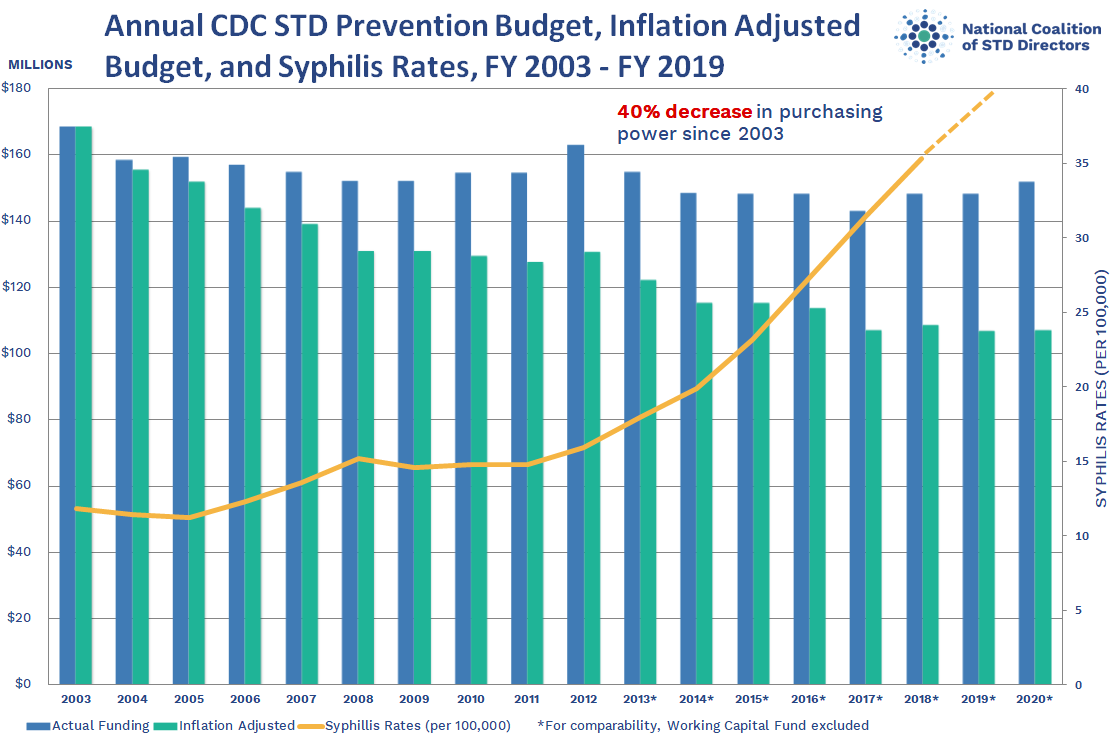
Syphilis and COVID-19: an epidemic within a pandemic
**
This post first appeared on the AFP Community Blog.
Monday, July 27, 2020
A meaningful best hospitals list, and a temporary relocation
In a previous blog post, I criticized the Cleveland Clinic, at the time ranked by U.S. News and World Report as the #2 hospital in America, for providing little tangible benefits to its surrounding community in exchange for its non-profit status. (The Cleveland Clinic is hardly alone in taking advantage of its reputation among patients and tax-exempt status to rack up lucrative profits; a Washington Monthly article exposes the University of Pittsburgh Medical Center's performance in this regard.) The title of my post was a question: How about ranking how well hospitals serve their communities?
The Lown Institute, in partnership with the Washington Monthly, has now done just that. For their "Best Hospitals for America" rankings released earlier this month, Lown created a Hospital Index that incorporated not only patient outcomes (mortality, safety, and satisfaction), but also civic leadership (community benefit, representativeness of patients compared to the surrounding community, and institutional salary distribution) and medical overuse. Unsurprisingly, few of the famous academic hospitals that traditionally dominate rankings (and receive the bulk of philanthropic and Medicare graduate education dollars) performed well on these criteria. Instead, top primary care and community-focused institutions such as JPS Health Network in Fort Worth, TX (#1) and Lancaster General Hospital in PA (#13) - where I completed my family medicine residency - led the way in the composite Lown rankings. Lown and the Washington Monthly hope that other hospitals can become more like JPS and LGH:
Hospitals motivated to rise in our rankings ... would compete to bring in patients from all levels of society, not just the well insured. They would find ways to get their staffs to stop performing unnecessary procedures and tests. They would try to reduce the pay differential between hospital workers and chief executives. (Do we really want our hospital workers earning so little that they feel they can’t afford to stay home when they’re sick, especially during a pandemic?) And they would put more of their earnings into improving the conditions that affect the health of their communities.
On a personal note, after 16 years of living and practicing family medicine in DC, I am relocating with my family to Salt Lake City for the next academic year so that my wife can pursue an training opportunity there. Even though I won't be physically in DC (my colleagues have graciously agreed to take on my patients while I'm away), and plan to continue practicing part-time while in Utah, I have decided not to change the tag line of this blog, "Common sense thoughts on health and conservative medicine from a family doctor in Washington, DC." I'm not sure how my new perspective and new colleagues (I will be a visiting professor in the Department of Family & Preventive Medicine at the University of Utah) will influence my blog posts, but I intend to keep writing regularly while I'm there.
Monday, July 20, 2020
Adverse childhood experiences and their sequelae in primary care
In a Curbside Consultation in the July 1 issue of American Family Physician, Drs. Jennifer Hinesley and Alex Krist discussed the primary care approach to a woman who presented with irritability, depression and anxiety and a history of childhood physical and sexual abuse. The U.S. Preventive Services Task Force (USPSTF) does not have a recommendation for screening for ACEs; however, a sample screening tool is available in a recent FPM article. In patients who disclose a history of ACEs, Drs. Hinesley and Krist suggested assessment for mental health conditions such as post-traumatic stress disorder and substance use disorders. For other health care needs, including preventive care, applying principles of trauma-informed care may reduce the risk of re-traumatization and increase patients' comfort.
Can screening for ACEs at well-child visits improve resilience and prevent future ACEs and associated toxic stress? Similarly, what types of interventions might help adults with a history of ACEs but no symptoms of related chronic issues? Dr. Krist previously wrote an AFP editorial about the necessary prerequisites for the USPSTF to recommend routine screening for social needs:
an accurate screening test to identify patients with the social need, an effective treatment to address the social need once identified, and evidence demonstrating a meaningful health outcome improvement for patients. We know that having a social need leads to poorer health. In some cases, we even know that screening identifies those with a need, but often we do not know what to do after we have identified the need.
Substituting "ACE" for "social need" highlights some potential problems with systematic identification of ACEs in primary care. As Dr. Thomas Campbell noted in a JAMA Viewpoint, the evidence is lacking that ACE-related clinical interventions in children or adults improve any health outcomes. It is possible that screening for ACEs might inadvertently cause harm by reducing trust between clinicians and patients or parents/guardians, or by erroneously labeling patients as "high risk" for future problems based on a high number of ACEs alone.
**
This post first appeared on the AFP Community Blog.
Thursday, July 9, 2020
Reopening schools (or anything else) safely depends on first containing the virus
Surely, we expected, by the start of the school year in the fall, the pandemic would be under control.
Unfortunately, with less than two months until Labor Day, COVID-19 still very much has the upper hand in the United States. Although pockets of the nation (including the Washington, DC area) have successfully reduced viral spread, two-thirds of states have seen increasing case numbers over the past two weeks, driving new national record highs each day. Belying President Trump's contention that the rising numbers are solely the result of increased testing, the number of infected patients hospitalized and in intensive care units are rising overall and skyrocketing in several states, and the number of daily deaths, which had been trending down since mid-April, is also on the rise.
If you want to read about how the U.S. became an international outlier in the fight against COVID-19 and who is to blame, check out James Fallows' story in The Atlantic, "The 3 Weeks That Changed Everything," and Jonathan Mahler's profile of Michigan governor Gretchen Whitmer's response to the crisis in The New York Times Magazine. A recent JAMA viewpoint also explored four types of cognitive bias that drove poor policy responses: identifiable victim effect (responding more aggressively to threats to identifiable lives than to projected statistical deaths), optimism bias (assuming that the best case scenario is most likely), present bias (preferring smaller immediate benefits to larger future benefits), and omission bias (preferring that a harm occur by failure to take action than as a direct consequence of actions taken). Regarding the latter, the authors wrote:
Policy makers who do not advocate for increasing the ventilator supply, and clinicians who follow triage guidelines, may perceive that they are responsible for the [COVID-19] deaths. In contrast, responsibility is more effortlessly evaded for causing greater numbers of deaths through failures to enact policies that effectively suppress viral spread.
There is much that we still don't know about the contribution of school-aged children to COVID-19 spread and the potential risks classroom exposures to adult teachers, administrators, cafeteria workers, and janitorial staff (who will likely shoulder the additional burden of frequently sanitizing shared spaces). Guidance from the Centers for Disease Control and Prevention (CDC) and the public health organization Resolve to Save Lives combines the best science and common sense to provide schools with strategies to minimize risk when and if they hold in-person instruction. But as former CDC Director Tom Frieden and the Education Secretaries under Presidents Obama and George W. Bush wrote in an editorial today:
The single most important thing we can do to keep our schools safe has nothing to do with what happens in schools. It’s how well communities control the coronavirus throughout the community. Such control of COVID-19 requires adhering to the three W’s—wear a mask, wash your hands, watch your distance—and boxing in the virus with strategic testing, effective isolation, complete contact tracing, and supportive quarantine—providing services and, if necessary, alternative temporary housing so patients and contacts don’t spread disease to others.
I hope that all of my children can return to school in person in the fall. But if they do, I want it to be because elected representatives and public health leaders have taken appropriate steps to contain COVID-19 and make school environments as safe as humanly possible, not due to political pressure or reckless executive orders.